Michael Hearns is the host and moderator of this Anti Money Laundering training and detection blog. Michael Hearns is a veteran South Florida Police Investigator with over 27 years of expereince, he spent a decade undercover within some of the most notorious drug cartels, and he now is using his insight and knowledge to discuss and comment on current money laundering trends and methods. Michael Hearns can also be found on his very inclusive and popular website: www.Launderingmoney.com
Monday, December 19, 2011
Feds: Tampa car dealer received more than $3 million in Hezbollah-related money-laundering scheme
By
Times Staff Writer
A Tampa used car dealer received more than $3 million from Hezbollah-related organizations as part of a large money-laundering scheme designed to funnel cash to the terrorist group, the U.S. government claims.
Mansour Brothers Auto Trading Inc., which specializes in exporting vehicles, is one of 30 used car dealers that were wired at least $329 million over a four-year period, according to the complaint.
The case, filed late last week by the U.S. Attorney's office for the Southern District of New York, is seeking the seizure of those proceeds — including the $3 million sent to Mansour Brothers, located on Kennedy Boulevard. It follows an investigation led by the U.S. Drug Enforcement Agency.
Mansour Brothers received 40 wire transfers totalling about $3.25 million between 2007 and 2011, according to the complaint. It does not allege that any of the used car dealerships, including Mansour Brothers, knew about the money laundering, and they are not being charged criminally.
Tim Shusta, a Tampa attorney who represents Sammy Mansour of Mansour Bros., said Saturday that his client had no knowledge of the scheme.
He also said the money was wired to buy cars and ship them to Africa. They didn't make a profit of $3 million from the transactions.
"It's not clear to me that they have the right to recover the $3 million," Shusta said.
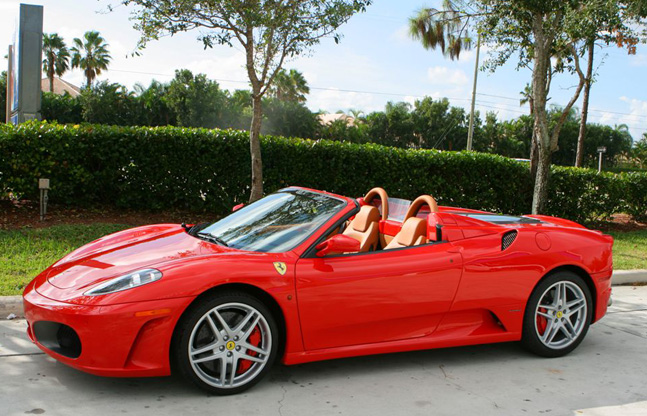
Federal authorities described the operation this way: Lebanese financial institutions, including a bank and two exchange houses linked to Hezbollah, wired funds to the United States, where the money was used to buy cars. The cars were then shipped to West Africa and sold for cash.
The cash from those car sales was then taken, along with money from drug trafficking and other crimes, to Lebanon. Hezbollah members and supporters were involved at various points, including financing and facilitating the purchase of some of the used cars.
"The intricate scheme laid out in (the) complaint reveals the deviously creative ways that terrorist organizations are funding themselves and moving their money," said Preet Bharara, U.S. Attorney for the Southern District of New York.
Hezbollah is a radical Islamic group that aims to create an Iranian-style Islamic republic in Lebanon. It is strongly anti-Israel and has been linked to bombings at a U.S. embassy and Marine barracks in the 1980s. Hezbollah, which holds about 10 percent of the seats in the Lebanese Parliament, receives weapons, money and organizational support from Iran, according to the U.S. Department of State.
Shusta said his client had no way of knowing that money was being passed to him by anyone who had anything to do with terrorism.
"They are an innocent party in the whole thing," Shusta said. "There are no allegations that allege that our client did anything wrong."
Shusta said Mansour Bros. is a very small company that's been open since 2005.
His client has been living in Tampa for about 30 years, he said.
Michael Hearns an Anti Money Laundering specialist with over 24 years of AML experience can also be found at http://www.launderingmoney.com/ and on twitter at : http://twitter.com/#!/LaunderingMoney http://moneylaunderingworld.blogspot.com/ and http://launderingmoney.com/
Saturday, December 17, 2011
Hezbollah Money Laundering Probe Focuses On Tulsa Car Dealership
Havonnah Johnson,
News 9
The DEA launches an investigation into a multi-million dollar money laundering scheme which starts in Oklahoma and involves Americans helping terrorists.
The scheme begins at used cars lots which are used as a cover for drugs and illegal activity.
Federal agents say it is a complicated scheme to cover the funding of terrorists. It involves 20 states and least 30 used car lots. The investigation is just beginning.
Undercover agents closed in on one used car dealership in Tulsa Friday. It is but one of dozens officials say are involved in a multi-layered money laundering scheme
Fifty-six terrorists groups all over the world are looking for new sources of funding. One of the ways they can find it is through drug sourcing activities.
Here is how it works. Used cars are shipped from the U.S. to several West African countries. After they are sold at a 15- to 20-percent mark-up, the profit goes to Hezbollah. Some money then gets returned to the United States to buy more cars.
In all, 30 domestic companies are being investigated. The red flag for the deal? A small call dealership in Tulsa. Authorities say Ace Auto in Tulsa received more than $20 million in wire transfers.
A joint terrorism task force is looking for more than $480 million dollars from Lebanese institutions.
No one was arrested in Tulsa, but authorities should reveal more in the coming weeks
Michael Hearns an Anti Money Laundering specialist with over 24 years of AML experience can also be found at http://www.launderingmoney.com/ and on twitter at : http://twitter.com/#!/LaunderingMoney http://moneylaunderingworld.blogspot.com/ and http://launderingmoney.com/
Thursday, December 15, 2011
Beirut Bank Seen as a Hub of Hezbollah’s Financing
By Jo Becker
New York Times
Last February, the Obama administration accused one of Lebanon’s famously secretive banks of laundering money for an international cocaine ring with ties to the Shiite militant group Hezbollah.
Now, in the wake of the bank’s exposure and arranged sale, its ledgers have been opened to reveal deeper secrets: a glimpse at the clandestine methods that Hezbollah — a terrorist organization in American eyes that has evolved into Lebanon’s pre-eminent military and political power — uses to finance its operations. The books offer evidence of an intricate global money-laundering apparatus that, with the bank as its hub, appeared to let Hezbollah move huge sums of money into the legitimate financial system, despite sanctions aimed at cutting off its economic lifeblood.
At the same time, the investigation that led the United States to the bank, the Lebanese Canadian Bank, provides new insights into the murky sources of Hezbollah’s money. While law enforcement agencies around the world have long believed that Hezbollah is a passive beneficiary of contributions from loyalists abroad involved in drug trafficking and a grab bag of other criminal enterprises, intelligence from several countries points to the direct involvement of high-level Hezbollah officials in the South American cocaine trade.
One agent involved in the investigation compared Hezbollah to the Mafia, saying, “They operate like the Gambinos on steroids.”
On Tuesday, federal prosecutors in Virginia announced the indictment of the man at the center of the Lebanese Canadian Bank case, charging that he had trafficked drugs and laundered money not only for Colombian cartels, but also for the murderous Mexican gang Los Zetas.
The revelations about Hezbollah and the Lebanese Canadian Bank reflect the changing political and military dynamics of Lebanon and the Middle East. American intelligence analysts believe that for years Hezbollah received as much as $200 million annually from its primary patron, Iran, along with additional aid from Syria. But that support has diminished, the analysts say, as Iran’s economy buckles under international sanctions over its nuclear program and Syria’s government battles rising popular unrest.
Yet, if anything, Hezbollah’s financial needs have grown alongside its increasing legitimacy here, as it seeks to rebuild after its 2006 war with Israel and expand its portfolio of political and social service activities. The result, analysts believe, has been a deeper reliance on criminal enterprises — especially the South American cocaine trade — and on a mechanism to move its ill-gotten cash around the world.
“The ability of terror groups like Hezbollah to tap into the worldwide criminal funding streams is the new post-9/11 challenge,” said Derek Maltz, the Drug Enforcement Administration official who oversaw the agency’s investigation into the Lebanese Canadian Bank.
In that inquiry, American Treasury officials said senior bank managers had assisted a handful of account holders in running a scheme to wash drug money by mixing it with the proceeds of used cars bought in the United States and sold in Africa. A cut of the profits, officials said, went to Hezbollah, a link the organization disputes.
The officials have refused to disclose their evidence for that allegation. But the outlines of a broader laundering network, and the degree to which Hezbollah’s business had come to suffuse the bank’s operations, emerged in recent months as the bank’s untainted assets were being sold, with American blessings, to a Beirut-based partner of the French banking giant Société Générale.
Of course, a money-laundering operation does not just come out and identify itself. But auditors brought in to scrub the books discovered nearly 200 accounts that were suspicious for their links to Hezbollah and their classic signs of money laundering.
In all, hundreds of millions of dollars a year sloshed through the accounts, held mainly by Shiite Muslim businessmen in the drug-smuggling nations of West Africa, many of them known Hezbollah supporters, trading in everything from rough-cut diamonds to cosmetics and frozen chicken, according to people with knowledge of the matter in the United States and Europe. The companies appeared to be serving as fronts for Hezbollah to move all sorts of dubious funds, on its own behalf or for others.
The system allowed Hezbollah to hide not only the sources of its wealth, but also its involvement in a range of business enterprises. One case involved perhaps the richest land deal in Lebanon’s history, the $240 million purchase late last year of more than 740 pristine acres overlooking the Mediterranean in the religiously diverse Chouf region.
The seller was a jet-set Christian jeweler, Robert Mouawad, whose clientele runs from Saudi royalty to Hollywood royalty. The buyer, at least on paper, was a Shiite diamond dealer, Nazem Said Ahmad.
In fact, according to people knowledgeable about Beirut real estate, the development corporation’s major investor was a relative of a former Hezbollah commander, Ali Tajeddine. The investor, in turn, received money that flowed through the bank from companies the United States has since designated as Hezbollah fronts, and from dealers implicated in the trade in so-called conflict diamonds and minerals, the Americans and Europeans with knowledge of the matter said. The Lebanese Canadian Bank provided a crucial loan.
And the deal fit a pattern, highly controversial in this religiously combustible land, in which entities tied to Hezbollah have been buying up militarily strategic pieces of property in largely Christian areas, helping the movement quietly fortify its geopolitical hegemony.
In a recent interview at his home in Taybeh, just north of the border with Israel — or as the signs here say, “Palestine” — Hezbollah’s chief political strategist and a member of Parliament, Ali Fayyad, denied that his organization was behind the Chouf purchase or other, similar land deals. He dismissed the American drug-trafficking allegations as politically motivated “propaganda,” adding, “We have no relationship to the Lebanese Canadian Bank.” The United States, he said, was simply persecuting innocent Shiite businessmen as a way “to punish us because we won our battle with Israel.”
For the United States, taking down the bank was part of a long-running strategy of deploying financial weapons to fight terrorism. This account of the serpentine, six-year inquiry and what has since been revealed is based on interviews with government, law enforcement and banking officials across three continents, as well as intelligence reports and police and corporate records.
As the case traveled up the administration’s chain of command beginning in the fall of 2010, some officials proposed leaving the Hezbollah link unsaid. They argued that simply blacklisting the bank would disrupt the network while insulating the United States from suspicions of playing politics, especially amid American alarm about ebbing influence in the Middle East. But the prevailing view was that the case offered what one official called “a great opportunity to dirty up Hezbollah” by pointing out the hypocrisy of the “Party of God” profiting from criminal activity.
Certainly the United States had ample cause to want to dirty up Hezbollah, Iran’s armed proxy and a persistent irritant to American interests in a chronically troubled region. (Just last week, in fact, Hezbollah’s long-running feud with the Central Intelligence Agency heated up when the organization broadcast what it said were the names of 10 American spies who had worked in recent years at the embassy in Beirut. )
The time was ripe, too, for taking on Hezbollah — a moment that crystallized its ascent but also its vulnerability. Just weeks before, Hezbollah’s political wing had played Lebanese kingmaker, engineering the fall of Prime Minister Saad Hariri, an American ally, and installing its own choice in his stead. At the same time, though, a United Nations tribunal was preparing to indict Hezbollah members in a spectacular bombing that killed Mr. Hariri’s father, former Prime Minister Rafik Hariri, in 2005.
John O. Brennan, the president’s counterterrorism adviser, recalled the debate in a recent interview. “I thought that if Hezbollah was involved in the drug trade,” he said, “let’s make sure that gets out.”
A State Within a State
Founded three decades ago as a guerrilla force aimed at the Israeli occupation of southern Lebanon, Hezbollah has never before had such a prominent place in the country’s official politics. Yet much of its power, and its ability to operate with some impunity, derives from elsewhere: from its status as a state within the Lebanese state.
Its militia is considerably stronger than the national army. Its social service agencies perform many of the functions of government, and it controls the international airport and the smuggling routes along the Syrian border, as well as the budgets of the government agencies charged with policing them.
In an interview, the chief of Lebanese customs’ drug and money-laundering unit, Lt. Col. Joseph N. Skaf, described a Sisyphean task: Passengers are allowed to bring in unlimited amounts of cash without declaring it. He has only 12 officers to search for drugs, and scanners at the airport and seaport do not work. “My hands are tied,” he said.
That this sliver of a country would be a crossroads for all manner of trade owes much to the flourishing of a worldwide diaspora; more Lebanese live abroad than at home. Through criminal elements in these émigré communities, Hezbollah has gained a deepening foothold in the cocaine business, according to an assessment by the United Nations Office on Drugs and Crime described in a leaked 2009 State Department cable.
From a trafficking standpoint, the émigrés were in the right places at the right time. As demand increased in Europe and the Middle East, the cartels began plying new routes — from Colombia, Venezuela and the lawless frontier where Brazil, Paraguay and Argentina meet, to West African countries like Benin and Gambia. From there, drugs moved north through Portugal or Spain, or east via Syria and Lebanon.
According to Lebanon’s drug enforcement chief, Col. Adel Mashmoushi, one path into the country was aboard a weekly Iranian-operated flight from Venezuela to Damascus and then over the border. Several American officials confirmed that, emphasizing that such an operation would be impossible without Hezbollah’s involvement.
In South America and in Europe, prosecutors began noticing Lebanese Shiite middlemen working for the cartels. But the strongest evidence of an expanding Hezbollah role in the drug trade, that it was not just the passive recipient of tainted money, comes from the two investigations that ultimately led to the Lebanese Canadian Bank.
The trail began with a man known as Taliban, overheard on Colombian wiretaps of a Medellín cartel, La Oficina de Envigado. Actually, he was a Lebanese transplant, Chekri Mahmoud Harb, and in June 2007, he met in Bogotá with an undercover agent for the Drug Enforcement Administration and sketched out his route.
Cocaine was shipped by sea to Port Aqaba, Jordan, then smuggled into Syria. After Mr. Harb bragged that he could deliver 950 kilos into Lebanon within hours, the undercover agent casually remarked that he must have Hezbollah connections. Mr. Harb smiled and nodded, the agent reported.
(Jordanian officials, after extensive surveillance, later told the D.E.A. that the Syrian leg of the shipment was coordinated by a Syrian intelligence officer assigned as a liaison to Hezbollah. From there, multiple sources reported, Hezbollah operatives charged a tax to guarantee shipments into Lebanon.)
Soon the cartel was giving the agent money to launder: $20 million in all. But before Mr. Harb could reveal the entire scheme and identify his Hezbollah contacts, the operation broke down: The C.I.A., initially skeptical of a Hezbollah link, now wanted in on the case. On the eve of a planned meeting in Jordan, it forced the undercover agent to postpone. His quarry spooked. In the end, Mr. Harb was convicted on federal drug trafficking and money-laundering charges, but the window into the organization’s heart had slammed shut.
It was “like having a girl you love break up with you,” one agent said later, adding, “We lost everything.”
A New Target
Actually they had not. Before long, a new target emerged.
A call had come in to a wiretapped phone tied to Mr. Harb and the cartel. The caller had arranged for cocaine proceeds to be picked up at a Paris hotel and laundered back to Colombia. The meeting turned out to be a sting.
“He says, ‘I just lost a million euros in France,’ ” recalled one of the agents listening in. “The way he talked — no one loses a million euros and is so nonchalant about it. Usually, there are bodies in the street.”
Agents had known that there was a major money launderer whose phone sat in Lebanon. Now they had a name: Ayman Joumaa, formerly of Medellín, now owner of the Caesars Park Hotel in Beirut. He was a Sunni Muslim, but cellphones seized at the Paris hotel linked him to Shiites in Hezbollah strongholds in southern Lebanon, according to Interpol records.
He was also known to Israeli intelligence. Israeli intercepts showed him in contact with a member of Hezbollah’s “1,800 Unit,” alleged to coordinate attacks inside Israel. Mr. Joumaa’s contact, in turn, worked for a senior operative who the Israelis believed handled Hezbollah’s drug operations.
His name was Abu Abdallah, and he had popped up in the Harb wiretaps, too: At one point, as Mr. Harb was complaining about “the sons of whores I owe money to,” a relative from his hometown warned that the “people of Abu Abdallah, the people we do not dare have problems or fight with,” were looking for him, wanting money.
Eventually an American team dispatched to look into Mr. Joumaa’s activities uncovered the used-car operation. Cars bought in United States were sold in Africa, with cash proceeds flown into Beirut and deposited into three money-exchange houses, one owned by Mr. Joumaa’s family and another down the street from his hotel. The exchanges then deposited the money, the ostensible proceeds of a booming auto trade, into the Lebanese Canadian Bank, so named because it was once a subsidiary of the Royal Bank of Canada Middle East.
But the numbers did not add up. The car lots in the United States, many owned by Lebanese émigrés and one linked to a separate Hezbollah weapons-smuggling scheme, were not moving nearly enough merchandise to account for all that cash, American officials said. What was really going on, they concluded, was that European drug proceeds were being intermingled with the car-sale cash to make it appear legitimate.
Hezbollah received its cut either from the exchange houses, or via the bank itself, according to the D.E.A. And the Treasury Department concluded that Iran also used the bank to avoid sanctions, with Hezbollah’s envoy to Tehran serving as go-between.
In Washington, after a long debate over when to act and what to make public, the administration decided to invoke a rarely used provision of the Patriot Act. Since the bank had been found to be of “primary money-laundering concern,” the Treasury Department could turn it into an international pariah by forbidding American financial institutions to deal with it. President Obama was briefed, and on Feb. 10, Treasury officials pulled the trigger.
As for Mr. Joumaa, the indictment announced Tuesday goes beyond the Europe-based operation outlined in the Lebanese Canadian Bank case. It charges him with coordinating shipments of Colombian cocaine to Los Zetas in Mexico for sale in the United States, and laundering the proceeds.
Whether he will ever face trial is an open question. The United States has no extradition treaty with Lebanon, and Mr. Joumaa’s whereabouts are unknown. He did not respond to several messages left at his hotel by The New York Times. Around Beirut, rumors abound.
Growing Skepticism
The Americans had identified only a handful of drug-tainted accounts at the Lebanese Canadian Bank. The search for further trouble began over the summer, after the Société Générale de Banque au Liban, or S.G.B.L., agreed to buy the bank’s assets.
As part of its own agreement with Treasury officials, Lebanon’s Central Bank set up a process to scrub the books. But compliance officers at S.G.B.L.’s French partner, Société Générale, were skeptical of the Central Bank’s choice of investigators. One of them, the local affiliate of the international auditing firm Deloitte, had presumably missed the drug-related accounts the first time around, when it served as the Lebanese Canadian Bank’s outside auditor.
And, according to people knowledgeable about Lebanese banking, the central bank’s on-the-ground representative had been recommended to that post by Hezbollah.
As an extra step, to reassure wary international banks, the chairman of S.G.B.L., Antoun Sehnaoui, commissioned a parallel audit, with the help of Société Générale’s chief money-laundering compliance officer. And to make sure that his bank did not run afoul of Treasury officials by inadvertently taking on dirty assets, he also hired a consultant intimately familiar with the Patriot Act provision used to take the bank down: John Ashcroft, the former attorney general whose Justice Department wrote the law.
Identifying suspicious accounts is not a subjective business. Banks rely on internationally recognized standards and software that contains certain triggers.
For the assets of the Lebanese Canadian Bank, the process worked this way, according to the Americans and Europeans knowledgeable about the case:
Initially, the auditors looked only at records for the past year. As they began combing through thousands of accounts, they looked for customers with known links to Hezbollah. They also looked for telltale patterns: repeated deposits of vast amounts of cash, huge wire transfers broken into smaller transactions and transfers between companies in such wildly incongruous lines of business that they made sense only as fronts to camouflage the true origin of the funds.
Each type of red flag was assigned a point value. An account with 1 or 2 points on a scale to 10 was likely to survive. One with 8 or 9 cried out for further scrutiny. Ultimately, the auditors were left with nearly 200 accounts that appeared to add up to a giant money-laundering operation, with Hezbollah smack in the middle, according to American officials. Complex webs of transactions featured the same companies over and over again, most of them owned by Shiite businessmen, many known Hezbollah supporters. Some have since been identified as Hezbollah fronts.
At the center of many of these webs were companies trading in diamonds, which experts say are fast replacing more traditional money-laundering vehicles because they are easy to transport and are generally traded for cash. Large transactions leave no paper trail, and values can be altered through bogus transactions. A number of these dealers had been implicated in the buying of “conflict diamonds” and other minerals used to finance civil wars and human-rights abuses in Africa.
In some cases, money moved in amounts — tens of millions of dollars at a clip — that made no sense, given the business models and potential sales of the companies involved.
“It’s like these guys no one had ever heard of became the most successful multimillionaires overnight,” said one person with knowledge of the investigation. “It’s Hezbollah’s money.”
Mr. Sehnaoui closed the deal in September. He declined to discuss details, but said: “We bought certain assets of the Lebanese Canadian Bank, and only the clean ones. We did not take any even slightly questionable clients.”
Lawyers for Mr. Ashcroft’s firm said all the problematic accounts had been excised, even though it meant losing nearly $30 million a year in interest and fees. “As current and potential problems have been uncovered, he has not hesitated to act,” Mr. Ashcroft said of his client.
From the Treasury Department’s perspective, the case is a victory, albeit an incremental one, in the battle against terrorism financing. Lebanon’s Central Bank showed that it was willing to shut down the Lebanese Canadian Bank and sell it to a “responsible owner,” said Daniel L. Glaser, assistant Treasury secretary for terrorism financing. An important avenue to Hezbollah has been blocked.
Still, Treasury officials have no illusions that their work here is done. From the beginning, the blacklisting was also intended as a wider warning to a banking industry that, with secrecy to rival the Swiss, forms the backbone of Lebanon’s economy: henceforth, other bankers did business with Hezbollah at their peril.
“What the Central Bank hasn’t fully demonstrated, and the jury is still out, is whether they will use this as a launching pad to ensure that these illicit actors aren’t migrating elsewhere,” Mr. Glaser said.
The signs are not terribly encouraging. The Central Bank governor, Riad Salameh, cut short an interview when asked about the aftermath of the American action, calling it an “old story.” As for those nearly 200 suspect accounts, Mr. Salameh would only say that he does not involve himself in such commercial questions.
Privately, he has played down the findings to the Treasury Department, attributing much of the suspicious activity to peculiarities in the way business is done in Africa. Those accounts he did deem problematic, he told the Americans, have been referred to Lebanon’s general prosecutor. But the prosecutor refused to comment, and his deputy, who handles money-laundering inquiries, said last week that he had received nothing.
In fact, as Treasury officials acknowledge, on Mr. Salameh’s watch, most of the accounts were simply transferred to several other Lebanese banks.
Michael Hearns an Anti Money Laundering specialist with over 24 years of AML experience can also be found at http://www.launderingmoney.com/ and on twitter at : http://twitter.com/#!/LaunderingMoney http://moneylaunderingworld.blogspot.com/ and http://launderingmoney.com/
New York Times
Last February, the Obama administration accused one of Lebanon’s famously secretive banks of laundering money for an international cocaine ring with ties to the Shiite militant group Hezbollah.
Now, in the wake of the bank’s exposure and arranged sale, its ledgers have been opened to reveal deeper secrets: a glimpse at the clandestine methods that Hezbollah — a terrorist organization in American eyes that has evolved into Lebanon’s pre-eminent military and political power — uses to finance its operations. The books offer evidence of an intricate global money-laundering apparatus that, with the bank as its hub, appeared to let Hezbollah move huge sums of money into the legitimate financial system, despite sanctions aimed at cutting off its economic lifeblood.
At the same time, the investigation that led the United States to the bank, the Lebanese Canadian Bank, provides new insights into the murky sources of Hezbollah’s money. While law enforcement agencies around the world have long believed that Hezbollah is a passive beneficiary of contributions from loyalists abroad involved in drug trafficking and a grab bag of other criminal enterprises, intelligence from several countries points to the direct involvement of high-level Hezbollah officials in the South American cocaine trade.
One agent involved in the investigation compared Hezbollah to the Mafia, saying, “They operate like the Gambinos on steroids.”
On Tuesday, federal prosecutors in Virginia announced the indictment of the man at the center of the Lebanese Canadian Bank case, charging that he had trafficked drugs and laundered money not only for Colombian cartels, but also for the murderous Mexican gang Los Zetas.
The revelations about Hezbollah and the Lebanese Canadian Bank reflect the changing political and military dynamics of Lebanon and the Middle East. American intelligence analysts believe that for years Hezbollah received as much as $200 million annually from its primary patron, Iran, along with additional aid from Syria. But that support has diminished, the analysts say, as Iran’s economy buckles under international sanctions over its nuclear program and Syria’s government battles rising popular unrest.
Yet, if anything, Hezbollah’s financial needs have grown alongside its increasing legitimacy here, as it seeks to rebuild after its 2006 war with Israel and expand its portfolio of political and social service activities. The result, analysts believe, has been a deeper reliance on criminal enterprises — especially the South American cocaine trade — and on a mechanism to move its ill-gotten cash around the world.
“The ability of terror groups like Hezbollah to tap into the worldwide criminal funding streams is the new post-9/11 challenge,” said Derek Maltz, the Drug Enforcement Administration official who oversaw the agency’s investigation into the Lebanese Canadian Bank.
In that inquiry, American Treasury officials said senior bank managers had assisted a handful of account holders in running a scheme to wash drug money by mixing it with the proceeds of used cars bought in the United States and sold in Africa. A cut of the profits, officials said, went to Hezbollah, a link the organization disputes.
The officials have refused to disclose their evidence for that allegation. But the outlines of a broader laundering network, and the degree to which Hezbollah’s business had come to suffuse the bank’s operations, emerged in recent months as the bank’s untainted assets were being sold, with American blessings, to a Beirut-based partner of the French banking giant Société Générale.
Of course, a money-laundering operation does not just come out and identify itself. But auditors brought in to scrub the books discovered nearly 200 accounts that were suspicious for their links to Hezbollah and their classic signs of money laundering.
In all, hundreds of millions of dollars a year sloshed through the accounts, held mainly by Shiite Muslim businessmen in the drug-smuggling nations of West Africa, many of them known Hezbollah supporters, trading in everything from rough-cut diamonds to cosmetics and frozen chicken, according to people with knowledge of the matter in the United States and Europe. The companies appeared to be serving as fronts for Hezbollah to move all sorts of dubious funds, on its own behalf or for others.
The system allowed Hezbollah to hide not only the sources of its wealth, but also its involvement in a range of business enterprises. One case involved perhaps the richest land deal in Lebanon’s history, the $240 million purchase late last year of more than 740 pristine acres overlooking the Mediterranean in the religiously diverse Chouf region.
The seller was a jet-set Christian jeweler, Robert Mouawad, whose clientele runs from Saudi royalty to Hollywood royalty. The buyer, at least on paper, was a Shiite diamond dealer, Nazem Said Ahmad.
In fact, according to people knowledgeable about Beirut real estate, the development corporation’s major investor was a relative of a former Hezbollah commander, Ali Tajeddine. The investor, in turn, received money that flowed through the bank from companies the United States has since designated as Hezbollah fronts, and from dealers implicated in the trade in so-called conflict diamonds and minerals, the Americans and Europeans with knowledge of the matter said. The Lebanese Canadian Bank provided a crucial loan.
And the deal fit a pattern, highly controversial in this religiously combustible land, in which entities tied to Hezbollah have been buying up militarily strategic pieces of property in largely Christian areas, helping the movement quietly fortify its geopolitical hegemony.
In a recent interview at his home in Taybeh, just north of the border with Israel — or as the signs here say, “Palestine” — Hezbollah’s chief political strategist and a member of Parliament, Ali Fayyad, denied that his organization was behind the Chouf purchase or other, similar land deals. He dismissed the American drug-trafficking allegations as politically motivated “propaganda,” adding, “We have no relationship to the Lebanese Canadian Bank.” The United States, he said, was simply persecuting innocent Shiite businessmen as a way “to punish us because we won our battle with Israel.”
For the United States, taking down the bank was part of a long-running strategy of deploying financial weapons to fight terrorism. This account of the serpentine, six-year inquiry and what has since been revealed is based on interviews with government, law enforcement and banking officials across three continents, as well as intelligence reports and police and corporate records.
As the case traveled up the administration’s chain of command beginning in the fall of 2010, some officials proposed leaving the Hezbollah link unsaid. They argued that simply blacklisting the bank would disrupt the network while insulating the United States from suspicions of playing politics, especially amid American alarm about ebbing influence in the Middle East. But the prevailing view was that the case offered what one official called “a great opportunity to dirty up Hezbollah” by pointing out the hypocrisy of the “Party of God” profiting from criminal activity.
Certainly the United States had ample cause to want to dirty up Hezbollah, Iran’s armed proxy and a persistent irritant to American interests in a chronically troubled region. (Just last week, in fact, Hezbollah’s long-running feud with the Central Intelligence Agency heated up when the organization broadcast what it said were the names of 10 American spies who had worked in recent years at the embassy in Beirut. )
The time was ripe, too, for taking on Hezbollah — a moment that crystallized its ascent but also its vulnerability. Just weeks before, Hezbollah’s political wing had played Lebanese kingmaker, engineering the fall of Prime Minister Saad Hariri, an American ally, and installing its own choice in his stead. At the same time, though, a United Nations tribunal was preparing to indict Hezbollah members in a spectacular bombing that killed Mr. Hariri’s father, former Prime Minister Rafik Hariri, in 2005.
John O. Brennan, the president’s counterterrorism adviser, recalled the debate in a recent interview. “I thought that if Hezbollah was involved in the drug trade,” he said, “let’s make sure that gets out.”
A State Within a State
Founded three decades ago as a guerrilla force aimed at the Israeli occupation of southern Lebanon, Hezbollah has never before had such a prominent place in the country’s official politics. Yet much of its power, and its ability to operate with some impunity, derives from elsewhere: from its status as a state within the Lebanese state.
Its militia is considerably stronger than the national army. Its social service agencies perform many of the functions of government, and it controls the international airport and the smuggling routes along the Syrian border, as well as the budgets of the government agencies charged with policing them.
In an interview, the chief of Lebanese customs’ drug and money-laundering unit, Lt. Col. Joseph N. Skaf, described a Sisyphean task: Passengers are allowed to bring in unlimited amounts of cash without declaring it. He has only 12 officers to search for drugs, and scanners at the airport and seaport do not work. “My hands are tied,” he said.
That this sliver of a country would be a crossroads for all manner of trade owes much to the flourishing of a worldwide diaspora; more Lebanese live abroad than at home. Through criminal elements in these émigré communities, Hezbollah has gained a deepening foothold in the cocaine business, according to an assessment by the United Nations Office on Drugs and Crime described in a leaked 2009 State Department cable.
From a trafficking standpoint, the émigrés were in the right places at the right time. As demand increased in Europe and the Middle East, the cartels began plying new routes — from Colombia, Venezuela and the lawless frontier where Brazil, Paraguay and Argentina meet, to West African countries like Benin and Gambia. From there, drugs moved north through Portugal or Spain, or east via Syria and Lebanon.
According to Lebanon’s drug enforcement chief, Col. Adel Mashmoushi, one path into the country was aboard a weekly Iranian-operated flight from Venezuela to Damascus and then over the border. Several American officials confirmed that, emphasizing that such an operation would be impossible without Hezbollah’s involvement.
In South America and in Europe, prosecutors began noticing Lebanese Shiite middlemen working for the cartels. But the strongest evidence of an expanding Hezbollah role in the drug trade, that it was not just the passive recipient of tainted money, comes from the two investigations that ultimately led to the Lebanese Canadian Bank.
The trail began with a man known as Taliban, overheard on Colombian wiretaps of a Medellín cartel, La Oficina de Envigado. Actually, he was a Lebanese transplant, Chekri Mahmoud Harb, and in June 2007, he met in Bogotá with an undercover agent for the Drug Enforcement Administration and sketched out his route.
Cocaine was shipped by sea to Port Aqaba, Jordan, then smuggled into Syria. After Mr. Harb bragged that he could deliver 950 kilos into Lebanon within hours, the undercover agent casually remarked that he must have Hezbollah connections. Mr. Harb smiled and nodded, the agent reported.
(Jordanian officials, after extensive surveillance, later told the D.E.A. that the Syrian leg of the shipment was coordinated by a Syrian intelligence officer assigned as a liaison to Hezbollah. From there, multiple sources reported, Hezbollah operatives charged a tax to guarantee shipments into Lebanon.)
Soon the cartel was giving the agent money to launder: $20 million in all. But before Mr. Harb could reveal the entire scheme and identify his Hezbollah contacts, the operation broke down: The C.I.A., initially skeptical of a Hezbollah link, now wanted in on the case. On the eve of a planned meeting in Jordan, it forced the undercover agent to postpone. His quarry spooked. In the end, Mr. Harb was convicted on federal drug trafficking and money-laundering charges, but the window into the organization’s heart had slammed shut.
It was “like having a girl you love break up with you,” one agent said later, adding, “We lost everything.”
A New Target
Actually they had not. Before long, a new target emerged.
A call had come in to a wiretapped phone tied to Mr. Harb and the cartel. The caller had arranged for cocaine proceeds to be picked up at a Paris hotel and laundered back to Colombia. The meeting turned out to be a sting.
“He says, ‘I just lost a million euros in France,’ ” recalled one of the agents listening in. “The way he talked — no one loses a million euros and is so nonchalant about it. Usually, there are bodies in the street.”
Agents had known that there was a major money launderer whose phone sat in Lebanon. Now they had a name: Ayman Joumaa, formerly of Medellín, now owner of the Caesars Park Hotel in Beirut. He was a Sunni Muslim, but cellphones seized at the Paris hotel linked him to Shiites in Hezbollah strongholds in southern Lebanon, according to Interpol records.
He was also known to Israeli intelligence. Israeli intercepts showed him in contact with a member of Hezbollah’s “1,800 Unit,” alleged to coordinate attacks inside Israel. Mr. Joumaa’s contact, in turn, worked for a senior operative who the Israelis believed handled Hezbollah’s drug operations.
His name was Abu Abdallah, and he had popped up in the Harb wiretaps, too: At one point, as Mr. Harb was complaining about “the sons of whores I owe money to,” a relative from his hometown warned that the “people of Abu Abdallah, the people we do not dare have problems or fight with,” were looking for him, wanting money.
Eventually an American team dispatched to look into Mr. Joumaa’s activities uncovered the used-car operation. Cars bought in United States were sold in Africa, with cash proceeds flown into Beirut and deposited into three money-exchange houses, one owned by Mr. Joumaa’s family and another down the street from his hotel. The exchanges then deposited the money, the ostensible proceeds of a booming auto trade, into the Lebanese Canadian Bank, so named because it was once a subsidiary of the Royal Bank of Canada Middle East.
But the numbers did not add up. The car lots in the United States, many owned by Lebanese émigrés and one linked to a separate Hezbollah weapons-smuggling scheme, were not moving nearly enough merchandise to account for all that cash, American officials said. What was really going on, they concluded, was that European drug proceeds were being intermingled with the car-sale cash to make it appear legitimate.
Hezbollah received its cut either from the exchange houses, or via the bank itself, according to the D.E.A. And the Treasury Department concluded that Iran also used the bank to avoid sanctions, with Hezbollah’s envoy to Tehran serving as go-between.
In Washington, after a long debate over when to act and what to make public, the administration decided to invoke a rarely used provision of the Patriot Act. Since the bank had been found to be of “primary money-laundering concern,” the Treasury Department could turn it into an international pariah by forbidding American financial institutions to deal with it. President Obama was briefed, and on Feb. 10, Treasury officials pulled the trigger.
As for Mr. Joumaa, the indictment announced Tuesday goes beyond the Europe-based operation outlined in the Lebanese Canadian Bank case. It charges him with coordinating shipments of Colombian cocaine to Los Zetas in Mexico for sale in the United States, and laundering the proceeds.
Whether he will ever face trial is an open question. The United States has no extradition treaty with Lebanon, and Mr. Joumaa’s whereabouts are unknown. He did not respond to several messages left at his hotel by The New York Times. Around Beirut, rumors abound.
Growing Skepticism
The Americans had identified only a handful of drug-tainted accounts at the Lebanese Canadian Bank. The search for further trouble began over the summer, after the Société Générale de Banque au Liban, or S.G.B.L., agreed to buy the bank’s assets.
As part of its own agreement with Treasury officials, Lebanon’s Central Bank set up a process to scrub the books. But compliance officers at S.G.B.L.’s French partner, Société Générale, were skeptical of the Central Bank’s choice of investigators. One of them, the local affiliate of the international auditing firm Deloitte, had presumably missed the drug-related accounts the first time around, when it served as the Lebanese Canadian Bank’s outside auditor.
And, according to people knowledgeable about Lebanese banking, the central bank’s on-the-ground representative had been recommended to that post by Hezbollah.
As an extra step, to reassure wary international banks, the chairman of S.G.B.L., Antoun Sehnaoui, commissioned a parallel audit, with the help of Société Générale’s chief money-laundering compliance officer. And to make sure that his bank did not run afoul of Treasury officials by inadvertently taking on dirty assets, he also hired a consultant intimately familiar with the Patriot Act provision used to take the bank down: John Ashcroft, the former attorney general whose Justice Department wrote the law.
Identifying suspicious accounts is not a subjective business. Banks rely on internationally recognized standards and software that contains certain triggers.
For the assets of the Lebanese Canadian Bank, the process worked this way, according to the Americans and Europeans knowledgeable about the case:
Initially, the auditors looked only at records for the past year. As they began combing through thousands of accounts, they looked for customers with known links to Hezbollah. They also looked for telltale patterns: repeated deposits of vast amounts of cash, huge wire transfers broken into smaller transactions and transfers between companies in such wildly incongruous lines of business that they made sense only as fronts to camouflage the true origin of the funds.
Each type of red flag was assigned a point value. An account with 1 or 2 points on a scale to 10 was likely to survive. One with 8 or 9 cried out for further scrutiny. Ultimately, the auditors were left with nearly 200 accounts that appeared to add up to a giant money-laundering operation, with Hezbollah smack in the middle, according to American officials. Complex webs of transactions featured the same companies over and over again, most of them owned by Shiite businessmen, many known Hezbollah supporters. Some have since been identified as Hezbollah fronts.
At the center of many of these webs were companies trading in diamonds, which experts say are fast replacing more traditional money-laundering vehicles because they are easy to transport and are generally traded for cash. Large transactions leave no paper trail, and values can be altered through bogus transactions. A number of these dealers had been implicated in the buying of “conflict diamonds” and other minerals used to finance civil wars and human-rights abuses in Africa.
In some cases, money moved in amounts — tens of millions of dollars at a clip — that made no sense, given the business models and potential sales of the companies involved.
“It’s like these guys no one had ever heard of became the most successful multimillionaires overnight,” said one person with knowledge of the investigation. “It’s Hezbollah’s money.”
Mr. Sehnaoui closed the deal in September. He declined to discuss details, but said: “We bought certain assets of the Lebanese Canadian Bank, and only the clean ones. We did not take any even slightly questionable clients.”
Lawyers for Mr. Ashcroft’s firm said all the problematic accounts had been excised, even though it meant losing nearly $30 million a year in interest and fees. “As current and potential problems have been uncovered, he has not hesitated to act,” Mr. Ashcroft said of his client.
From the Treasury Department’s perspective, the case is a victory, albeit an incremental one, in the battle against terrorism financing. Lebanon’s Central Bank showed that it was willing to shut down the Lebanese Canadian Bank and sell it to a “responsible owner,” said Daniel L. Glaser, assistant Treasury secretary for terrorism financing. An important avenue to Hezbollah has been blocked.
Still, Treasury officials have no illusions that their work here is done. From the beginning, the blacklisting was also intended as a wider warning to a banking industry that, with secrecy to rival the Swiss, forms the backbone of Lebanon’s economy: henceforth, other bankers did business with Hezbollah at their peril.
“What the Central Bank hasn’t fully demonstrated, and the jury is still out, is whether they will use this as a launching pad to ensure that these illicit actors aren’t migrating elsewhere,” Mr. Glaser said.
The signs are not terribly encouraging. The Central Bank governor, Riad Salameh, cut short an interview when asked about the aftermath of the American action, calling it an “old story.” As for those nearly 200 suspect accounts, Mr. Salameh would only say that he does not involve himself in such commercial questions.
Privately, he has played down the findings to the Treasury Department, attributing much of the suspicious activity to peculiarities in the way business is done in Africa. Those accounts he did deem problematic, he told the Americans, have been referred to Lebanon’s general prosecutor. But the prosecutor refused to comment, and his deputy, who handles money-laundering inquiries, said last week that he had received nothing.
In fact, as Treasury officials acknowledge, on Mr. Salameh’s watch, most of the accounts were simply transferred to several other Lebanese banks.
Michael Hearns an Anti Money Laundering specialist with over 24 years of AML experience can also be found at http://www.launderingmoney.com/ and on twitter at : http://twitter.com/#!/LaunderingMoney http://moneylaunderingworld.blogspot.com/ and http://launderingmoney.com/
Tuesday, December 13, 2011
12 charged with laundering money from behind prison bars
By Jennifer van der Kleu
The Santa Clara County District Attorney’s Office, in partnership with the Santa Clara County Sheriff’s Department, has uncovered a money laundering scheme within the walls of the Milpitas-based Elmwood Correctional Facility that has left 34 victims with a total of $17,000 in losses.
According to County District Attorney Jeffrey Rosen and Deputy District Attorney Tom Flattery, an Elmwood inmate identified as 26-year-old Darin Volk of Turlock headed up the scheme with 11 others.
Volk allegedly enlisted the help of fellow inmates for the use of their commissary and telephone accounts to launder money obtained from stolen credit card accounts. Commissary accounts are given to inmates in prison and allow them to either deposit funds they earn from prison jobs, or allow friends and family to deposit funds for them, which can then be used to purchase items from the prison’s commissary store. Inmates can also authorize friends and family on the outside to withdraw money from their commissary accounts.
According to the District Attorney’s Office, one of Volk’s co-conspirators on the outside, Brian Hoar of Turlock, used stolen credit card accounts to deposit money into the commissary and telephone accounts of Volk and several other inmates.
Volk would then direct three other co-conspirators—Heather Murphree of Turlock, Shanna Conroy of San Jose, and Jaimelynn Sakoda of San Jose—to withdraw a portion of the funds from the inmate accounts. If the inmates authorized the withdrawals from their accounts, they were rewarded by retaining the remainder of the funds, as payment for their cooperation.
“Jail personnel followed standard procedure and issued Santa Clara County checks to the three women without knowing that the accounts had been funded by fraud,” District Attorney Rosen said in a statement about the case.
Volk and his co-conspirators are being charged with conspiracy to commit identity theft, and identity theft.
Rosen also said that Volk and several others are being charged with “conspiracy to possess a cell phone in jail,” which is a crime.
“It is also alleged that, for a short time, Volk and other inmates had the use of a contraband cell phone inside the Elmwood facility,” said Rosen.
From April 24 to May 3, of this year, Rosen explained that the contraband cell phone was used to make 1,375 unauthorized calls from within jail, including 367 calls placed to online retailers, banks and shipping businesses.
“It is alleged that Volk arranged fraudulent commissary trust account deposits as payment for access to the contraband cell phone,” Rosen said.
The Elmwood money laundering scheme is not Volk’s first foray into the world of identity theft—the District Attorney’s Office said that, at the time he committed these crimes, Volk was serving time at Elmwood for a large-scale, multi-jurisdictional, counterfeit credit card manufacturing scheme.
For his part in the money laundering scheme, Volk faces an additional 25 years of local incarceration. Deputy District Attorney Flattery says Volk has been arraigned, and all of the defendants are scheduled to appear in court for a plea date on Wednesday, Dec. 21.
This case comes on the heels of a big announcement California Attorney General Kamala Harris is expected to make today in San Jose, regarding a new task force she is forming dedicated to investigating technology crimes and identity theft.
According to County District Attorney Jeffrey Rosen and Deputy District Attorney Tom Flattery, an Elmwood inmate identified as 26-year-old Darin Volk of Turlock headed up the scheme with 11 others.
Volk allegedly enlisted the help of fellow inmates for the use of their commissary and telephone accounts to launder money obtained from stolen credit card accounts. Commissary accounts are given to inmates in prison and allow them to either deposit funds they earn from prison jobs, or allow friends and family to deposit funds for them, which can then be used to purchase items from the prison’s commissary store. Inmates can also authorize friends and family on the outside to withdraw money from their commissary accounts.
According to the District Attorney’s Office, one of Volk’s co-conspirators on the outside, Brian Hoar of Turlock, used stolen credit card accounts to deposit money into the commissary and telephone accounts of Volk and several other inmates.
Volk would then direct three other co-conspirators—Heather Murphree of Turlock, Shanna Conroy of San Jose, and Jaimelynn Sakoda of San Jose—to withdraw a portion of the funds from the inmate accounts. If the inmates authorized the withdrawals from their accounts, they were rewarded by retaining the remainder of the funds, as payment for their cooperation.
“Jail personnel followed standard procedure and issued Santa Clara County checks to the three women without knowing that the accounts had been funded by fraud,” District Attorney Rosen said in a statement about the case.
Volk and his co-conspirators are being charged with conspiracy to commit identity theft, and identity theft.
Rosen also said that Volk and several others are being charged with “conspiracy to possess a cell phone in jail,” which is a crime.
“It is also alleged that, for a short time, Volk and other inmates had the use of a contraband cell phone inside the Elmwood facility,” said Rosen.
From April 24 to May 3, of this year, Rosen explained that the contraband cell phone was used to make 1,375 unauthorized calls from within jail, including 367 calls placed to online retailers, banks and shipping businesses.
“It is alleged that Volk arranged fraudulent commissary trust account deposits as payment for access to the contraband cell phone,” Rosen said.
The Elmwood money laundering scheme is not Volk’s first foray into the world of identity theft—the District Attorney’s Office said that, at the time he committed these crimes, Volk was serving time at Elmwood for a large-scale, multi-jurisdictional, counterfeit credit card manufacturing scheme.
For his part in the money laundering scheme, Volk faces an additional 25 years of local incarceration. Deputy District Attorney Flattery says Volk has been arraigned, and all of the defendants are scheduled to appear in court for a plea date on Wednesday, Dec. 21.
This case comes on the heels of a big announcement California Attorney General Kamala Harris is expected to make today in San Jose, regarding a new task force she is forming dedicated to investigating technology crimes and identity theft.
Michael Hearns an Anti Money Laundering specialist with over 24 years of AML experience can also be found at:
www.launderingmoney.com
and on twitter at : http://twitter.com/#!/LaunderingMoney
http://moneylaunderingworld.blogspot.com/
http://launderingmoney.com/
Monday, December 12, 2011
Alert over rise of ‘money mules’ used to launder criminals’ cash
Criminals are increasingly using “money mules” to launder cash through bank accounts, new research has revealed.
Often those who get involved are innocently lured into the practice without realising they are being duped by criminals to pay money into their personal accounts and transfer it on, allowing illegal gains to disappear into the system.
Sometimes those involved know exactly what is happening but there are concerns fraudsters are persuading innocent people to do personal favours or are offering what appears to be a genuine job to people in return for a small fee but, in fact, they are laundering cash.
In a recent development, the UK’s fraud prevention service said companies are also being used, with crooks hijacking an established name to dupe victims into illegally moving money under the pretext they will be working for the well-known company.
Sending emails and other information claiming to be from an established firm with a good name encourages the victim to believe they are being paid to do a genuine role.
Often those carrying out the frauds only realise what has been going on when they are contacted by their bank. By this time the fraudster has disappeared and the victim is left to shoulder the blame and persuade the authorities he or she had no idea what was going on.
One such student, who cannot be identified, answered a job advert on the internet for staff needed to work at home.
“Obviously, extra amounts of money for only a few hours work per week from home seemed ideal,” she said. “I never questioned it, as there seemed nothing untoward: I would be a sales and delivery agent for some legitimate goods, working for a small company.
“For arranging some ‘sales’ and sending the goods, I’d receive a cheque for pay and costs, and then forward money to my ‘employer’. The first few months were fine when – after a very successful month – I got a phone call from my bank saying that the cheque for my pay and costs that had just been paid in was fraudulent and investigations had proved that the account from which it was drawn was fraudulent too.
“I was out of pocket and suspected of being ‘in on it’ of course.”
Figures from Cifas, the UK’s fraud prevention service, show there has been a 12 per cent hike in the numbers of accounts legitimately obtained but later used fraudulently, in the first ten months of this year, in comparison with 2010. Over the same period there has been a six per cent increase in the misuse of personal current accounts.
Cifas says a large proportion of these frauds display the hallmarks of money laundering.
In one recent case the boss of a well-established travel company discovered that crooks had hijacked her company’s good name, sending out emails claiming to be from her company, giving the impression the victim was working for her.
She said: “Although they’re using my corporate and not my personal details to defraud another company, the situation is practically identical: duping others into acting criminally under the pretence of working for me. All, of course, using the internet – making it even harder to track the culprits down and stop them.”
Richard Hurley, Cifas communication manager, said: “Whether they are referred to as scams or frauds, the effect is the same: people are duped into committing fraud. This often leaves the innocent victim who acted as the mule needing to prove that they were duped. This can be a truly traumatic experience for the mule victim: committing fraud can have some very serious consequences, as businesses have a regulatory and commercial requirement to suspend or close accounts that are involved in fraud.
Mr Hurley added: “Being asked to receive and then pay monies while keeping a fee for your services – whether for an individual or company – will almost always prove to be nothing more than a scam designed to use your good name and financial records to mask someone else’s criminal greed. And it is the mules, even the innocent ones, not the fraudsters, who are left to sort out the consequences.”
Michael Hearns an Anti Money Laundering specialist with over 24 years of AML experience can also be found at http://www.launderingmoney.com/ and on twitter at : http://twitter.com/#!/LaunderingMoney http://moneylaunderingworld.blogspot.com/ and http://launderingmoney.com/
Saturday, December 10, 2011
Leader of Zapata drug trafficking, money laundering organization convicted
By Jim Kouri,
Public Safety Examiner
Pedro Navarro Jr., of Zapata, Texas, pleaded guilty Thursday before U.S. Magistrate Judge Guillermo Garcia to his roles in distributing marijuana and methamphetamine and then laundering proceeds from those drug sales.
The 36-year old Navarro is the leader of a drug trafficking and money laundering organization operating out of the Zapata, Texas, area from approximately June 2006 through June 2011.
During his plea hearing Thursday, Navarro admitted that between February 2008 and June 2011, he was responsible for transporting numerous shipments of controlled substances from the Zapata area to other parts of Texas and beyond.
Some of these drug shipments were interdicted by law enforcement, including numerous loads of marijuana totaling thousands of kilograms and approximately five kilograms of methamphetamine which was seized in Beasley, Texas, on April 5, 2011.
During his plea hearing, Navarro also confessed to being a member and leader of the drug trafficking conspiracy responsible for these marijuana and methamphetamine loads. In addition to being responsible for transporting drugs, he also admitted he used a residence on Falcon Lake to store the marijuana after it had been smuggled from Mexico into the United States.
This marijuana would normally be ferried across the lake from Mexico at night in small boats, which would pull up to his residence on the lake where individuals would then unload the marijuana. Later, Navarro would then ensure the marijuana was loaded into passenger vehicles at the residence which would be driven to wherever the drugs were destined
Navarro also admitted that he conspired with others to launder money, which represented the proceeds of his drug trafficking. He agreed to transport large amounts of United States currency, which were the proceeds of drug trafficking, from the Zapata area to Mexico, and did so with the intention of promoting the continued operation of his drug trafficking business.
Navarro specifically agreed to help transport this money to Mexico, where it would be given to other members of the drug trafficking and money laundering conspiracies.
These persons provided the drugs which were being trafficked as well as provided them the money in question, thereby ensuring their illegal drug trafficking business would continue in operation. One of the specific loads of money for which Navarro was responsible included approximately $23,425 seized at or near Hebbronville, Texas, on March 9, 2010.
Navarro also used some of the proceeds he made from drug trafficking to build a residence in Zapata. During the course of the drug trafficking conspiracy, the members of conspiracy were responsible for generating proceeds from that activity in the amount of at least $18 million.
Navarro's sentencing date has yet to be scheduled.
Michael Hearns an Anti Money Laundering specialist with over 24 years of AML experience can also be found at http://www.launderingmoney.com/ and on twitter at : http://twitter.com/#!/LaunderingMoney http://moneylaunderingworld.blogspot.com/ and http://launderingmoney.com/
Friday, December 9, 2011
Anti Money Laundering report on Cyprus published
Property and precious metals and stones dealers may be undermining efforts to prevent money laundering in Cyprus, according to a new report.
The findings of the Council of Europe Committee of Experts on the Evaluation of Anti-Money Laundering Measures and the Financing of Terrorism (MONEYVAL) are published today.
The MONEYVAL report states: “Concerns remain that real estate and dealers in precious metals and stones may not be fully implementing the anti-money laundering requirements.
The committee does welcome additional measures taken by Cypriot authorities to fight money laundering and the financing of terrorism. It notes also the increased number of convictions for money laundering, together with helpful case law on the freezing and confiscation of assets.
The MONEYVAL report also confirms that the country’s financial sector appears to be adequately monitored but notes “the noticeable decrease in the past years of the number of on-site visits in some parts of the financial sector is of concern.” The full report can be seen HERE
Michael Hearns an Anti Money Laundering specialist with over 24 years of AML experience can also be found at http://www.launderingmoney.com/ and on twitter at : http://twitter.com/#!/LaunderingMoney http://moneylaunderingworld.blogspot.com/ and http://launderingmoney.com/
Location:
Cyprus
Subscribe to:
Comments (Atom)


